"A whimsical, surrealistic excursion into the modern scientific mind." --The New Yorker
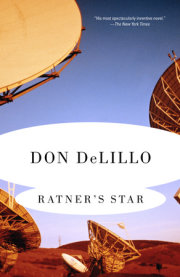
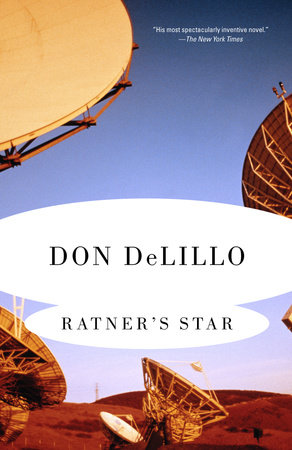
One of DeLillo's first novels, Ratner's Star follows Billy, the genius adolescent, who is recruited to live in obscurity, underground, as he tries to help a panel of estranged, demented, and yet lovable scientists communicate with beings from outer space. It is a mix of quirky humor, science, mathematical theories, as well as the complex emotional distance and sadness people feel. Ratner's Star demonstrates both the thematic and prosaic muscularity that typifies DeLillo's later and more recent works, like The Names (which is also available in Vintage Contemporaries).
"His most spectacularly inventive novel." --The New York Times
"[DeLillo's] most spectacularly inventive novel." --The New York Times
"A mind-expanding trip to the finish line, and full of wit and slapstick as well..." --Washington Post Book World
"Brilliantly...enormously ambitions.... Ratner's Star uses the story of an innocent's 'education' as the launching pad for a provocative, prodigious satire on those pioneers who journey beyond the frontiers of knowledge and end up more ignorant than they were when they set forth." --Chicago Tribune Book World "This red giant of a book...is not only interesting, but funny (in a nervous kind of way)." --The New York Times Book Review
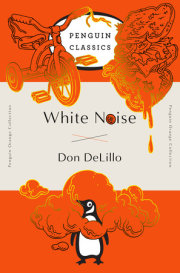
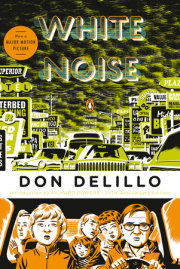
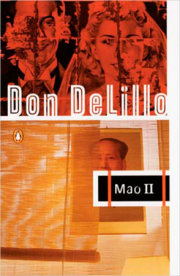
Don DeLillo has written seventeen novels, including White Noise, which won the National Book Award. It was followed by Libra, his bestselling novel about the assassination of President Kennedy; Mao II, which won the PEN/Faulkner Award for Fiction; and the bestselling Underworld, which in 2000 won the Howells Medal of the American Academy of Arts and Letters for the most distinguished work of fiction published in the prior five years. In 1999, DeLillo was awarded the Jerusalem Prize, given to a writer whose work expresses the theme of freedom of the individual in society. His other books include the novels Cosmopolis, Falling Man, and Point Omega and the story collection The Angel Esmeralda: Nine Stories. He has also written occasional essays and three stage plays. In 2010 DeLillo became the third author to receive the PEN/Saul Bellow Award for Achievement in American Fiction. He was awarded the Library of Congress Prize for American Fiction in 2013.
View titles by Don DeLillo
"A whimsical, surrealistic excursion into the modern scientific mind." --The New Yorker
One of DeLillo's first novels, Ratner's Star follows Billy, the genius adolescent, who is recruited to live in obscurity, underground, as he tries to help a panel of estranged, demented, and yet lovable scientists communicate with beings from outer space. It is a mix of quirky humor, science, mathematical theories, as well as the complex emotional distance and sadness people feel. Ratner's Star demonstrates both the thematic and prosaic muscularity that typifies DeLillo's later and more recent works, like The Names (which is also available in Vintage Contemporaries).
"His most spectacularly inventive novel." --The New York Times
Reviews
"[DeLillo's] most spectacularly inventive novel." --The New York Times
"A mind-expanding trip to the finish line, and full of wit and slapstick as well..." --Washington Post Book World
"Brilliantly...enormously ambitions.... Ratner's Star uses the story of an innocent's 'education' as the launching pad for a provocative, prodigious satire on those pioneers who journey beyond the frontiers of knowledge and end up more ignorant than they were when they set forth." --Chicago Tribune Book World "This red giant of a book...is not only interesting, but funny (in a nervous kind of way)." --The New York Times Book Review
Author
Don DeLillo has written seventeen novels, including White Noise, which won the National Book Award. It was followed by Libra, his bestselling novel about the assassination of President Kennedy; Mao II, which won the PEN/Faulkner Award for Fiction; and the bestselling Underworld, which in 2000 won the Howells Medal of the American Academy of Arts and Letters for the most distinguished work of fiction published in the prior five years. In 1999, DeLillo was awarded the Jerusalem Prize, given to a writer whose work expresses the theme of freedom of the individual in society. His other books include the novels Cosmopolis, Falling Man, and Point Omega and the story collection The Angel Esmeralda: Nine Stories. He has also written occasional essays and three stage plays. In 2010 DeLillo became the third author to receive the PEN/Saul Bellow Award for Achievement in American Fiction. He was awarded the Library of Congress Prize for American Fiction in 2013.
View titles by Don DeLillo