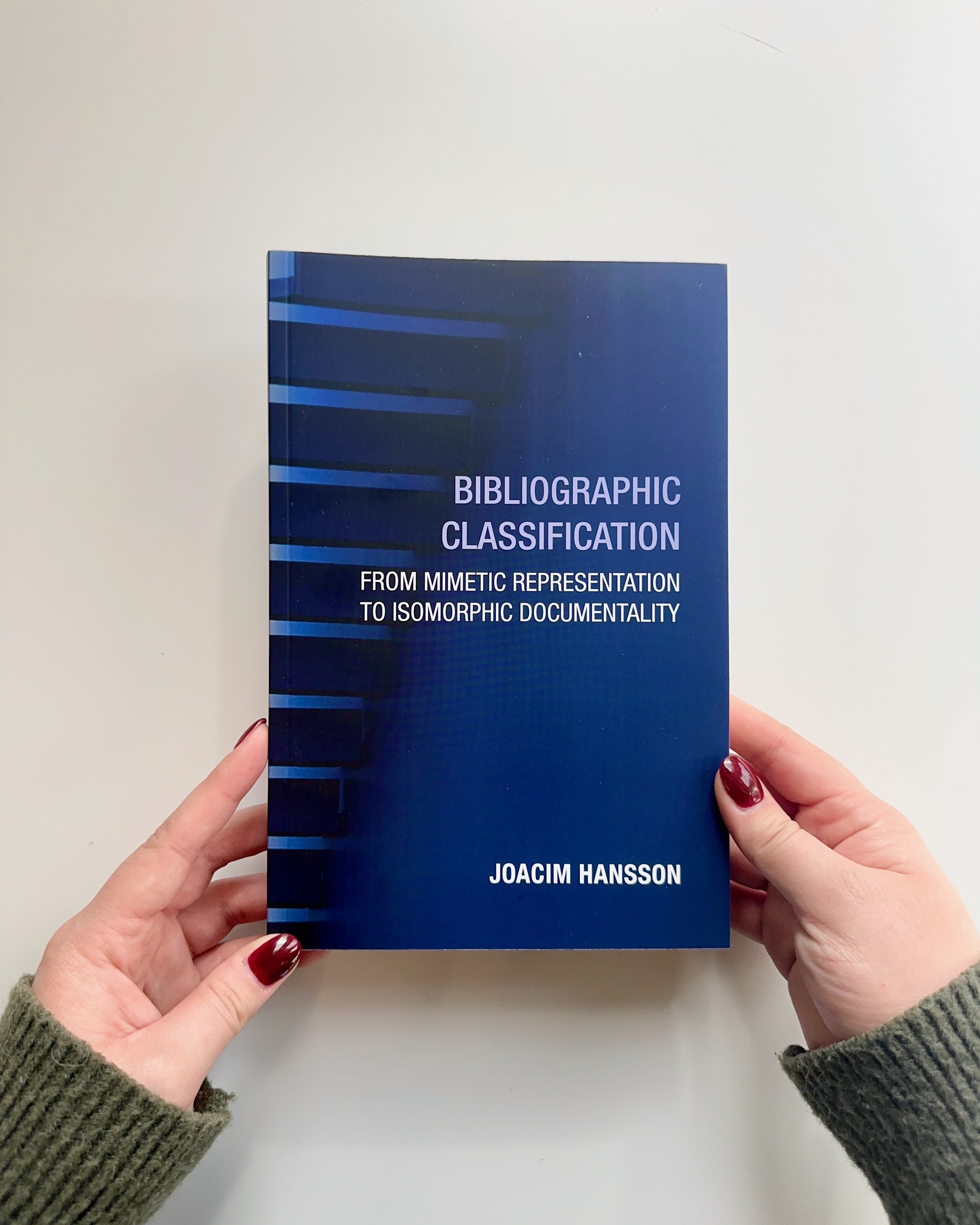
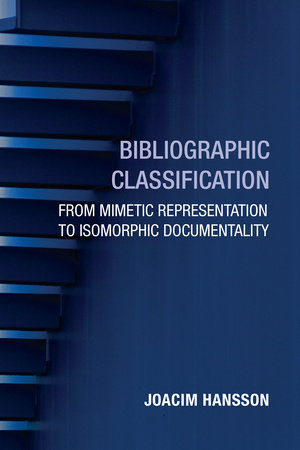
Bibliographic Classification

From Mimetic Representation to Isomorphic Documentality

Look inside
Paperback
$60.00 US
| $79.00 CAN
On sale Nov 18, 2025 | 216 Pages | 9780262553490

See Additional Formats
A novel analysis that understands bibliographic classification systems as autonomous documents and not just as information retrieval tools.

Bibliographical classification systems are developed as tools for the retrieval of documents and information in libraries or bibliographical catalogs. Traditionally, they have also served as organizing principles for library shelving. As with most kinds of classification, bibliographic classification systems are products of their time, encoding the beliefs and values of the cultures in which they are created. In Bibliographic Classification, Joacim Hansson addresses the connection between classification and society in a new way by analyzing bibliographic classification systems not just as information retrieval tools, but as autonomous documents, using a theoretical foundation from Document Studies, Information Science, and Organizational Theory.

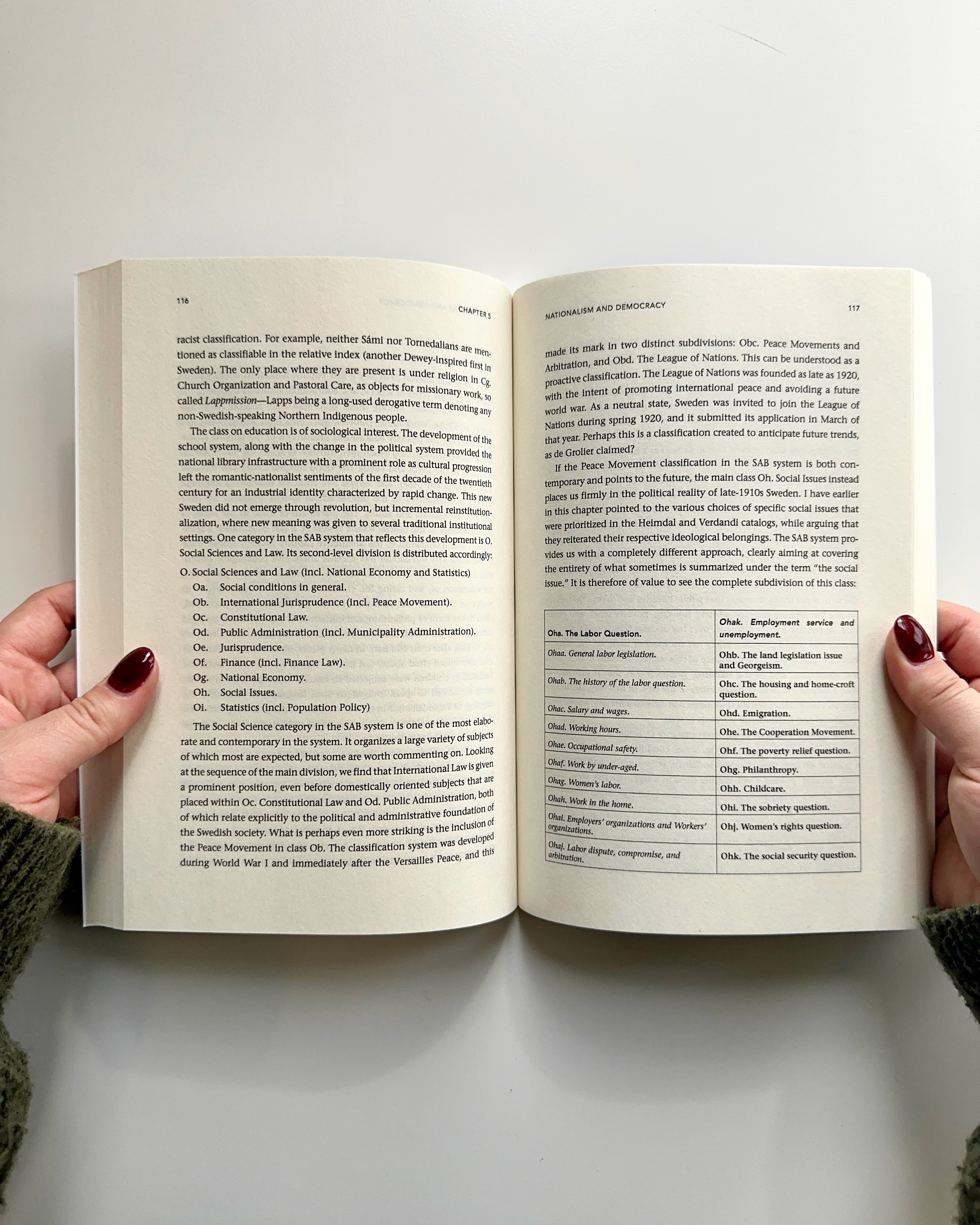
The book advances its argument in three case studies: the Universal Decimal Classification, read as part of progressive social movements in early twentieth-century Belgium; the Swedish SAB-system, developed in the late 1910s, read as a formulation of cultural integrity and nationalist reformulation; and Jewish bibliographic classification practice with specific focus on how to address historical Jewish identity and the Holocaust in Judaica collections.
Joacim Hansson is Professor of Library and Information Science at Linnaeus University, Växjö, Sweden. He has published nine books, both in Sweden and internationally, including Libraries and Identity and Educating Librarians in the Contemporary University.
Contents
Acknowledgments
1 An Introduction in Two Parts
2 Classification Systems as (Social) Documents
3 Questioning Representation: A Brief Note on Methodology
4 Universal Knowledge, Universal Language: Paul Otlet and the Universal Decimal Classification for Esperanto
5 Nationalism and Democracy: Public Libraries and Bibliographic Classification in Early Twentieth Century Sweden
6 Bibliographic Classification in Jewish Culture and the Problem of the Holocaust
7 The Mimetic and the Isomorphic
Notes
References
Index

additional book photo

About

A novel analysis that understands bibliographic classification systems as autonomous documents and not just as information retrieval tools.

Bibliographical classification systems are developed as tools for the retrieval of documents and information in libraries or bibliographical catalogs. Traditionally, they have also served as organizing principles for library shelving. As with most kinds of classification, bibliographic classification systems are products of their time, encoding the beliefs and values of the cultures in which they are created. In Bibliographic Classification, Joacim Hansson addresses the connection between classification and society in a new way by analyzing bibliographic classification systems not just as information retrieval tools, but as autonomous documents, using a theoretical foundation from Document Studies, Information Science, and Organizational Theory.

The book advances its argument in three case studies: the Universal Decimal Classification, read as part of progressive social movements in early twentieth-century Belgium; the Swedish SAB-system, developed in the late 1910s, read as a formulation of cultural integrity and nationalist reformulation; and Jewish bibliographic classification practice with specific focus on how to address historical Jewish identity and the Holocaust in Judaica collections.

Author

Joacim Hansson is Professor of Library and Information Science at Linnaeus University, Växjö, Sweden. He has published nine books, both in Sweden and internationally, including Libraries and Identity and Educating Librarians in the Contemporary University.

Table of Contents

Contents
Acknowledgments
1 An Introduction in Two Parts
2 Classification Systems as (Social) Documents
3 Questioning Representation: A Brief Note on Methodology
4 Universal Knowledge, Universal Language: Paul Otlet and the Universal Decimal Classification for Esperanto
5 Nationalism and Democracy: Public Libraries and Bibliographic Classification in Early Twentieth Century Sweden
6 Bibliographic Classification in Jewish Culture and the Problem of the Holocaust
7 The Mimetic and the Isomorphic
Notes
References
Index

Photos

additional book photo
  • More Websites from
    Penguin Random House
  • Common Reads
  • Library Marketing