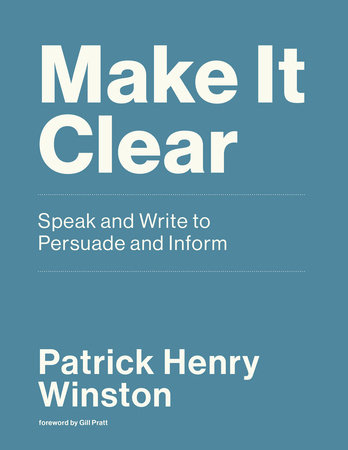
Make it Clear

Speak and Write to Persuade and Inform

Foreword by Gill Pratt
EFFECTIVE COMMUNICATION 101: An MIT professor with 40 years of teaching experience explains how to speak and write to get your ideas across.

Starting with the basics—finding your voice, organizing your ideas, making sure what you say is remembered, and receiving critiques (“do not ask for brutal honesty”)—this essential resource is packed with advice on how to write to be understood, how to inspire, how to defeat writer’s block, and much more. You’ll also learn about:

• Why you should start with an empowerment promise and conclude by noting you delivered on that promise

• How the combination of a well-crafted, explicitly identified slogan, symbol, salient idea, surprise, and story make you and your work memorable

• The VSN-C (Vision, Steps, News–Contributions) framework as an organizing structure and how to
create and organize your ideas with a “broken–glass” outline

• How to prepare slides, writing and rewriting, and even choosing a type family

Learning how to speak and write well will empower you and make you smarter. Effective communication can be life-changing—making use of just one principle in this book can get you the job, make the sale, convince your boss, inspire a student, or even start a revolution.
Patrick Henry Winston (1943-2019) was Ford Professor of Artificial Intelligence and Computer Science at MIT.
Patrick Henry Winston View titles by Patrick Henry Winston
Foreword, Acknowledgements, Prolog: You will be empowered
Part I Essentials
Essentials of persuasion
Essentials for being remembered
Ensure that you are remembered with Winston's star
Essentials of instruction
Essentials of outlining
Essentials of critiquing
Essentials of ethical behavior
Part II Presentation
How to choose time and place
How to prepare the ground
How to start
How to stop
How to use props
Part III Instruction
How to prepare to instruct
How to deliver a lecture
 How to inspire
Part IV Writing
How to write to be understood
How to organize your writing
What to put at the end
How to write an abstract
How to learn by imitation
How to avoid style blunders
How to defeat writer's block
Part V Design
How to make design choices Design matters
How to arrange graphics                                              
How  to work with graphs
How to work with images
Part VI Special cases
How to prepare a poster
How to give an elevator pitch
How to be interviewed
How to write a press release
How  to write a review
How to write a recommendation letter
How to run a briefing conference
How  to run a panel discussion
How to write a blog
Epilog: You are empowered

About

EFFECTIVE COMMUNICATION 101: An MIT professor with 40 years of teaching experience explains how to speak and write to get your ideas across.

Starting with the basics—finding your voice, organizing your ideas, making sure what you say is remembered, and receiving critiques (“do not ask for brutal honesty”)—this essential resource is packed with advice on how to write to be understood, how to inspire, how to defeat writer’s block, and much more. You’ll also learn about:

• Why you should start with an empowerment promise and conclude by noting you delivered on that promise

• How the combination of a well-crafted, explicitly identified slogan, symbol, salient idea, surprise, and story make you and your work memorable

• The VSN-C (Vision, Steps, News–Contributions) framework as an organizing structure and how to
create and organize your ideas with a “broken–glass” outline

• How to prepare slides, writing and rewriting, and even choosing a type family

Learning how to speak and write well will empower you and make you smarter. Effective communication can be life-changing—making use of just one principle in this book can get you the job, make the sale, convince your boss, inspire a student, or even start a revolution.

Author

Patrick Henry Winston (1943-2019) was Ford Professor of Artificial Intelligence and Computer Science at MIT.
Patrick Henry Winston View titles by Patrick Henry Winston

Table of Contents

Foreword, Acknowledgements, Prolog: You will be empowered
Part I Essentials
Essentials of persuasion
Essentials for being remembered
Ensure that you are remembered with Winston's star
Essentials of instruction
Essentials of outlining
Essentials of critiquing
Essentials of ethical behavior
Part II Presentation
How to choose time and place
How to prepare the ground
How to start
How to stop
How to use props
Part III Instruction
How to prepare to instruct
How to deliver a lecture
 How to inspire
Part IV Writing
How to write to be understood
How to organize your writing
What to put at the end
How to write an abstract
How to learn by imitation
How to avoid style blunders
How to defeat writer's block
Part V Design
How to make design choices Design matters
How to arrange graphics                                              
How  to work with graphs
How to work with images
Part VI Special cases
How to prepare a poster
How to give an elevator pitch
How to be interviewed
How to write a press release
How  to write a review
How to write a recommendation letter
How to run a briefing conference
How  to run a panel discussion
How to write a blog
Epilog: You are empowered
  • More Websites from
    Penguin Random House
  • Common Reads
  • Library Marketing