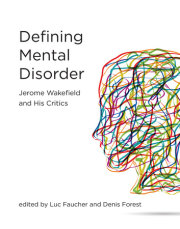
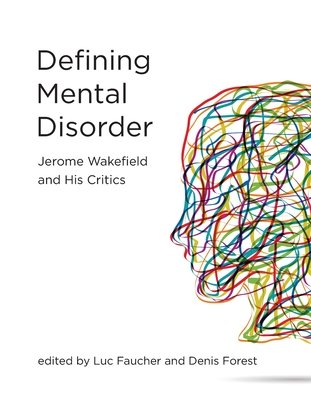
Defining Mental Disorder

Jerome Wakefield and His Critics

Paperback
$110.00 US
| $143.00 CAN
On sale Oct 28, 2025 | 640 Pages | 9780262055796

See Additional Formats
Philosophers discuss Jerome Wakefield's influential view of mental disorder as “harmful dysfunction,” with detailed responses from Wakefield himself.

One of the most pressing theoretical problems of psychiatry is the definition of mental disorder. Jerome Wakefield's proposal that mental disorder is “harmful dysfunction” has been both influential and widely debated; philosophers have been notably skeptical about it. This volume provides the first book-length collection of responses by philosophers to Wakefield's harmful dysfunction analysis (HDA), offering a survey of philosophical critiques as well as extensive and detailed replies by Wakefield himself.

HDA is offered as a definition of mental disorder, but it is also the outcome of a method—conceptual analysis—and contributors first take up HDA's methodology, considering such topics as HDA's influences on the DSM, empirical support for HDA, and clinical practice. They go on to discuss HDA's ultimate goal, the demarcation between normal and abnormal; the dysfunction component of the analysis, addressing issues that include developmental plasticity, autism and neurodiversity, and the science of salience; and the harmful component, examining harmless dysfunction, normal variation, medicalization, and other questions. Wakefield offers substantive responses to each chapter.

The open access edition of this book was made possible by generous funding from Arcadia – a charitable fund of Lisbet Rausing and Peter Baldwin.

Contributors
Rachel Cooper, Andreas De Block, Steeves Demazeux, Leen De Vreese, Luc Faucher, Denis Forest, Justin Garson, Philip Gerrans, Harold Kincaid, Maël Lemoine, Dominic Murphy, Jonathan Sholll, Tim Thornton, Jerome Wakefield, Peter Zachar
Luc Faucher is Professor in the Philosophy Department at the at the University of Québec in Montréal.

Denis Forest is Professor of Philosophy of Science in the Department of Philosophy at Paris 1 Panthéon-Sorbonne and Member of the IHPST (Institute of History and Philosophy of Science and Technique), Paris.

Harold Kincaid is Professor in the School of Economics and Director of the Research Unit in Behavioural Economics and Neuroeconomics at the University of Cape Town. He is the coeditor of Distributed Cognition and the Will: Individual Volition and Social Context and What Is Addiction? (both published by the MIT Press).

Peter Zachar is Professor in the Department of Psychology at Auburn University Montgomery. He is the author of Psychological Concepts and Biological Psychiatry: A Philosophical Analysis.

Dominic Murphy is Senior Lecturer in the Unit for History and Philosophy of Science at the University of Sydney.

Philip Gerrans is Professor of Philosophy at the University of Adelaide.
Introduction ix 
Denis Forest and Luc Faucher 
Wakefield Critiques: Introductory Comments xxix 
Jerome Wakefield 
I On Conceptual Analysis 
1 DSM in the Light of HDA (and Conversely) 3 
Steeves Demazeux 
2 From Ribot and Dupré to Spitzer and RDoC: Does the Harmful Dysfunction Analysis Possess Historical Explanatory Power? Reply to Steeves Demazeux 27 
Jerome Wakefield 
3 Facts, Facts, Facts: HD Analysis Goes Factual 47 
Luc Faucher 
4 Do the Empirical Facts Support the Harmful Dysfunction Analysis? Reply to Luc Faucher 71 
Jerome Wakefield 
5 Against the Disorder/Nondisorder Dichotomy 97 
Leen De Vreese 
6 Do Clinicians Understand the Harmful Dysfunction Analysis of Mental Disorder? Reply to Leen De Vreese 109 
Jerome Wakefield 
7 Doing without “Disorder” in the Study of Psychopathology 123 
Harold Kincaid 
8 Quinian Qualms, or Does Psychiatry Really Need the Harmful Dysfunction Analysis? Reply to Harold Kincaid 133 
Jerome Wakefield
II The Demarcation Problem 
9 Psychiatric Disorders and the Imperfect Community: A Nominalist HDA 157 
Peter Zachar 
10 Can a Nonessentialist Neo-Empiricist Analysis of Mental Disorder Replace the Harmful Dysfunction Analysis? Reply to Peter Zachar 177 
Jerome Wakefield 
III The Dysfunction Component
11 Is the Dysfunction Component of the “Harmful Dysfunction Analysis” Stipulative? 199 
Maël Lemoine 
12 Is the Harmful Dysfunction Analysis Descriptive or Stipulative, and Is the HDA or BST the Better Naturalist Account of Dysfunction? Reply to Maël Lemoine 213 
Jerome Wakefield 
13 Function and Dysfunction 251 
Dominic Murphy 
14 Can Causal Role Functions Yield Objective Judgments of Medical Dysfunction and Replace the Harmful Dysfunction Analysis’s Evolutionary Component? Reply to Dominic Murphy 267 
Jerome Wakefield 
15 Do the Works of Carl Craver or Marcel Weber Explain How Causal Role Functions Can Provide Objective Medical Judgments of Dysfunction? Supplementary Reply to Dominic Murphy 317 
Jerome Wakefield 
16 The Developmental Plasticity Challenge to Wakefield’s View 335 
Justin Garson 
17 Does Developmental Plasticity Pose a Challenge to the Harmful Dysfunction Analysis? Reply to Justin Garson 353 
Jerome Wakefield 
18 Biological Function Hierarchies and Indeterminacy of Dysfunction: Supplementary Reply to Justin Garson 385 
Jerome Wakefield 
19 Harmful Dysfunction and the Science of Salience: Adaptations and Adaptationism 397 
Philip Gerrans
20 Are Cognitive Neuroscience and the Harmful Dysfunction Analysis Competitors or Allies? Reply to Philip Gerrans 415 
Jerome Wakefield 
21 Autistic Spectrum, Normal Variation, and Harmful Dysfunction 
Denis Forest 433 
22 Do the Challenges of Autism and Neurodiversity Pose an Objection to the Harmful Dysfunction Analysis? Reply to Denis Forest 449 
Jerome Wakefield 
23 Naturalism and Dysfunction 469 
Tim Thornton 
24 Is Indeterminacy of Biological Function an Objection to the Harmful Dysfunction Analysis? Reply to Tim Thornton 485 
Jerome Wakefield 
IV The Harmful Component 
25 Harmless Dysfunctions and the Problem of Normal Variation 
Andreas De Block and Jonathan Sholl 495 
26 Can the Harmful Dysfunction Analysis Distinguish Problematic Normal Variation from Disorder? Reply to Andreas De Block and Jonathan Sholl 511 
Jerome Wakefield 
27 On Harm 537 
Rachel Cooper 
28 Must Social Values Play a Role in the Harm Component of the Harmful Dysfunction Analysis? Reply to Rachel Cooper 553 
Jerome Wakefield 
29 Are There Naturally Selected Disorders? Supplementary Reply to Rachel Cooper 577 
Jerome Wakefield 
Contributors 593 
Index 595

About

Philosophers discuss Jerome Wakefield's influential view of mental disorder as “harmful dysfunction,” with detailed responses from Wakefield himself.

One of the most pressing theoretical problems of psychiatry is the definition of mental disorder. Jerome Wakefield's proposal that mental disorder is “harmful dysfunction” has been both influential and widely debated; philosophers have been notably skeptical about it. This volume provides the first book-length collection of responses by philosophers to Wakefield's harmful dysfunction analysis (HDA), offering a survey of philosophical critiques as well as extensive and detailed replies by Wakefield himself.

HDA is offered as a definition of mental disorder, but it is also the outcome of a method—conceptual analysis—and contributors first take up HDA's methodology, considering such topics as HDA's influences on the DSM, empirical support for HDA, and clinical practice. They go on to discuss HDA's ultimate goal, the demarcation between normal and abnormal; the dysfunction component of the analysis, addressing issues that include developmental plasticity, autism and neurodiversity, and the science of salience; and the harmful component, examining harmless dysfunction, normal variation, medicalization, and other questions. Wakefield offers substantive responses to each chapter.

The open access edition of this book was made possible by generous funding from Arcadia – a charitable fund of Lisbet Rausing and Peter Baldwin.

Contributors
Rachel Cooper, Andreas De Block, Steeves Demazeux, Leen De Vreese, Luc Faucher, Denis Forest, Justin Garson, Philip Gerrans, Harold Kincaid, Maël Lemoine, Dominic Murphy, Jonathan Sholll, Tim Thornton, Jerome Wakefield, Peter Zachar

Author

Luc Faucher is Professor in the Philosophy Department at the at the University of Québec in Montréal.

Denis Forest is Professor of Philosophy of Science in the Department of Philosophy at Paris 1 Panthéon-Sorbonne and Member of the IHPST (Institute of History and Philosophy of Science and Technique), Paris.

Harold Kincaid is Professor in the School of Economics and Director of the Research Unit in Behavioural Economics and Neuroeconomics at the University of Cape Town. He is the coeditor of Distributed Cognition and the Will: Individual Volition and Social Context and What Is Addiction? (both published by the MIT Press).

Peter Zachar is Professor in the Department of Psychology at Auburn University Montgomery. He is the author of Psychological Concepts and Biological Psychiatry: A Philosophical Analysis.

Dominic Murphy is Senior Lecturer in the Unit for History and Philosophy of Science at the University of Sydney.

Philip Gerrans is Professor of Philosophy at the University of Adelaide.

Table of Contents

Introduction ix 
Denis Forest and Luc Faucher 
Wakefield Critiques: Introductory Comments xxix 
Jerome Wakefield 
I On Conceptual Analysis 
1 DSM in the Light of HDA (and Conversely) 3 
Steeves Demazeux 
2 From Ribot and Dupré to Spitzer and RDoC: Does the Harmful Dysfunction Analysis Possess Historical Explanatory Power? Reply to Steeves Demazeux 27 
Jerome Wakefield 
3 Facts, Facts, Facts: HD Analysis Goes Factual 47 
Luc Faucher 
4 Do the Empirical Facts Support the Harmful Dysfunction Analysis? Reply to Luc Faucher 71 
Jerome Wakefield 
5 Against the Disorder/Nondisorder Dichotomy 97 
Leen De Vreese 
6 Do Clinicians Understand the Harmful Dysfunction Analysis of Mental Disorder? Reply to Leen De Vreese 109 
Jerome Wakefield 
7 Doing without “Disorder” in the Study of Psychopathology 123 
Harold Kincaid 
8 Quinian Qualms, or Does Psychiatry Really Need the Harmful Dysfunction Analysis? Reply to Harold Kincaid 133 
Jerome Wakefield
II The Demarcation Problem 
9 Psychiatric Disorders and the Imperfect Community: A Nominalist HDA 157 
Peter Zachar 
10 Can a Nonessentialist Neo-Empiricist Analysis of Mental Disorder Replace the Harmful Dysfunction Analysis? Reply to Peter Zachar 177 
Jerome Wakefield 
III The Dysfunction Component
11 Is the Dysfunction Component of the “Harmful Dysfunction Analysis” Stipulative? 199 
Maël Lemoine 
12 Is the Harmful Dysfunction Analysis Descriptive or Stipulative, and Is the HDA or BST the Better Naturalist Account of Dysfunction? Reply to Maël Lemoine 213 
Jerome Wakefield 
13 Function and Dysfunction 251 
Dominic Murphy 
14 Can Causal Role Functions Yield Objective Judgments of Medical Dysfunction and Replace the Harmful Dysfunction Analysis’s Evolutionary Component? Reply to Dominic Murphy 267 
Jerome Wakefield 
15 Do the Works of Carl Craver or Marcel Weber Explain How Causal Role Functions Can Provide Objective Medical Judgments of Dysfunction? Supplementary Reply to Dominic Murphy 317 
Jerome Wakefield 
16 The Developmental Plasticity Challenge to Wakefield’s View 335 
Justin Garson 
17 Does Developmental Plasticity Pose a Challenge to the Harmful Dysfunction Analysis? Reply to Justin Garson 353 
Jerome Wakefield 
18 Biological Function Hierarchies and Indeterminacy of Dysfunction: Supplementary Reply to Justin Garson 385 
Jerome Wakefield 
19 Harmful Dysfunction and the Science of Salience: Adaptations and Adaptationism 397 
Philip Gerrans
20 Are Cognitive Neuroscience and the Harmful Dysfunction Analysis Competitors or Allies? Reply to Philip Gerrans 415 
Jerome Wakefield 
21 Autistic Spectrum, Normal Variation, and Harmful Dysfunction 
Denis Forest 433 
22 Do the Challenges of Autism and Neurodiversity Pose an Objection to the Harmful Dysfunction Analysis? Reply to Denis Forest 449 
Jerome Wakefield 
23 Naturalism and Dysfunction 469 
Tim Thornton 
24 Is Indeterminacy of Biological Function an Objection to the Harmful Dysfunction Analysis? Reply to Tim Thornton 485 
Jerome Wakefield 
IV The Harmful Component 
25 Harmless Dysfunctions and the Problem of Normal Variation 
Andreas De Block and Jonathan Sholl 495 
26 Can the Harmful Dysfunction Analysis Distinguish Problematic Normal Variation from Disorder? Reply to Andreas De Block and Jonathan Sholl 511 
Jerome Wakefield 
27 On Harm 537 
Rachel Cooper 
28 Must Social Values Play a Role in the Harm Component of the Harmful Dysfunction Analysis? Reply to Rachel Cooper 553 
Jerome Wakefield 
29 Are There Naturally Selected Disorders? Supplementary Reply to Rachel Cooper 577 
Jerome Wakefield 
Contributors 593 
Index 595
  • More Websites from
    Penguin Random House
  • Common Reads
  • Library Marketing