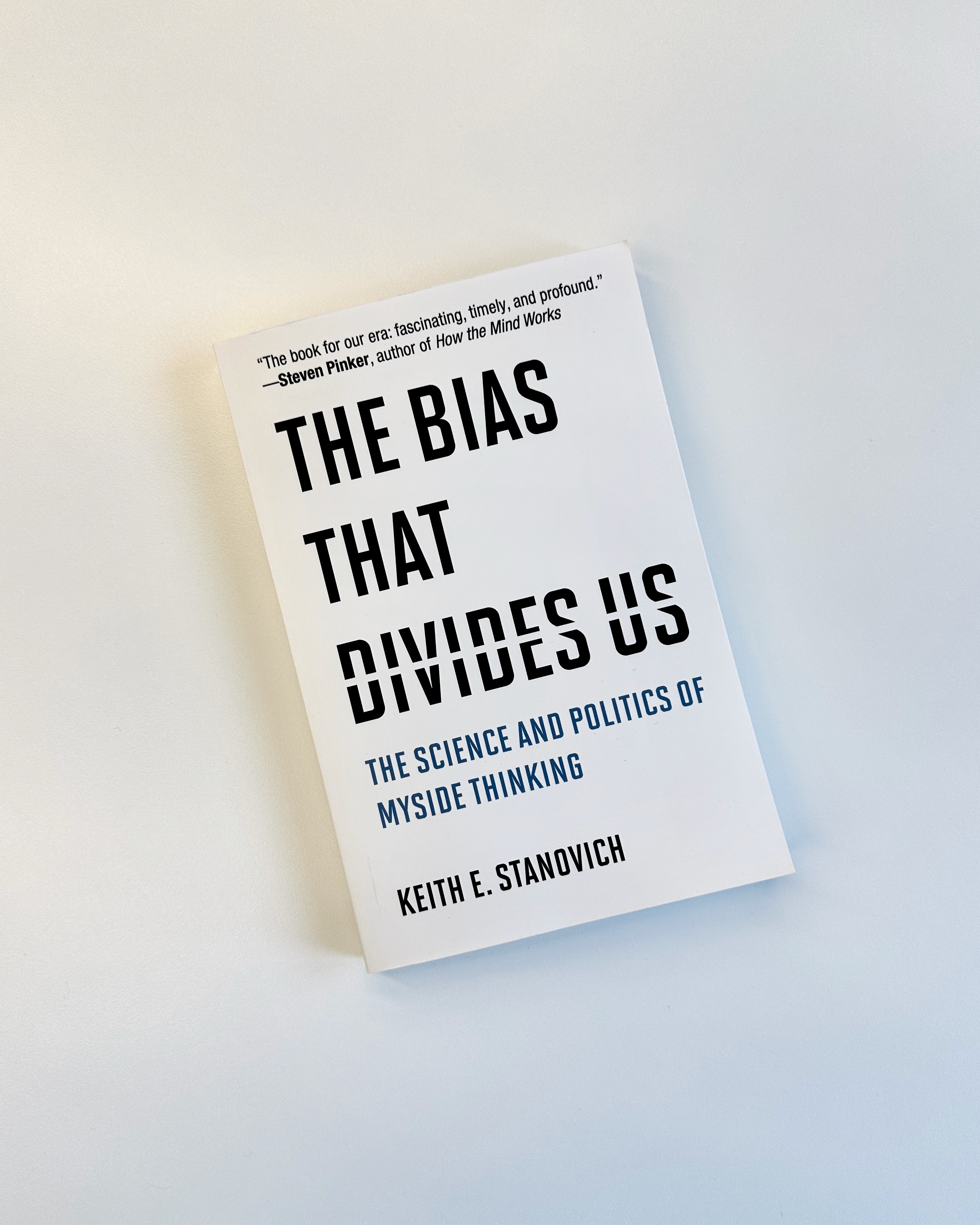
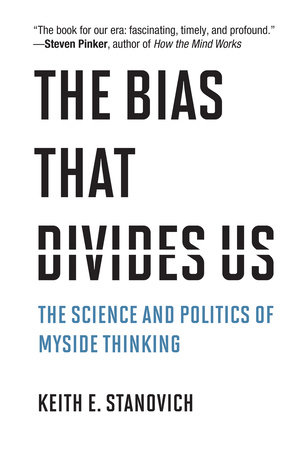
The Bias That Divides Us

The Science and Politics of Myside Thinking

Why we don't live in a post-truth society but rather a myside society: what science tells us about the bias that poisons our politics.

In The Bias That Divides Us, psychologist Keith Stanovich argues provocatively that we don’t live in a post-truth society, as has been claimed, but rather a myside society. Our problem is not that we are unable to value and respect truth and facts but that we are unable to agree on commonly accepted truth and facts. We believe that our side knows the truth. Post-truth? That describes the other side. The inevitable result is political polarization. Stanovich shows what science can tell us about myside bias: how common it is, how to avoid it, and what purposes it serves.
Keith E. Stanovich is Professor Emeritus of Applied Psychology and Human Development at the University of Toronto. He is the author of What Intelligence Tests Miss, for which he received the 2010 Grawemeyer Award in Education, and coauthor of The Rationality Quotient: Toward a Test of Rational Thinking (MIT Press). In 2012, Stanovich received the E. L. Thorndike Career Achievement Award from the American Psychological Association. He lives in Portland, Oregon.
Preface
Acknowledgments
1 The Many Faces of Myside Bias
2 Is Myside Processing Irrational?
3 Myside Thinking: The Outlier Bias
4 Where Do Our Convictions Come From? Implications for Understanding Myside Bias
5 The Myside Blindness of Cognitive Elites
6 What Should We Do about Myside Bias?
Notes
References 
Subject Index
Name Index

additional book photo

About

Why we don't live in a post-truth society but rather a myside society: what science tells us about the bias that poisons our politics.

In The Bias That Divides Us, psychologist Keith Stanovich argues provocatively that we don’t live in a post-truth society, as has been claimed, but rather a myside society. Our problem is not that we are unable to value and respect truth and facts but that we are unable to agree on commonly accepted truth and facts. We believe that our side knows the truth. Post-truth? That describes the other side. The inevitable result is political polarization. Stanovich shows what science can tell us about myside bias: how common it is, how to avoid it, and what purposes it serves.

Author

Keith E. Stanovich is Professor Emeritus of Applied Psychology and Human Development at the University of Toronto. He is the author of What Intelligence Tests Miss, for which he received the 2010 Grawemeyer Award in Education, and coauthor of The Rationality Quotient: Toward a Test of Rational Thinking (MIT Press). In 2012, Stanovich received the E. L. Thorndike Career Achievement Award from the American Psychological Association. He lives in Portland, Oregon.

Table of Contents

Preface
Acknowledgments
1 The Many Faces of Myside Bias
2 Is Myside Processing Irrational?
3 Myside Thinking: The Outlier Bias
4 Where Do Our Convictions Come From? Implications for Understanding Myside Bias
5 The Myside Blindness of Cognitive Elites
6 What Should We Do about Myside Bias?
Notes
References 
Subject Index
Name Index

Photos

additional book photo
  • More Websites from
    Penguin Random House
  • Common Reads
  • Library Marketing